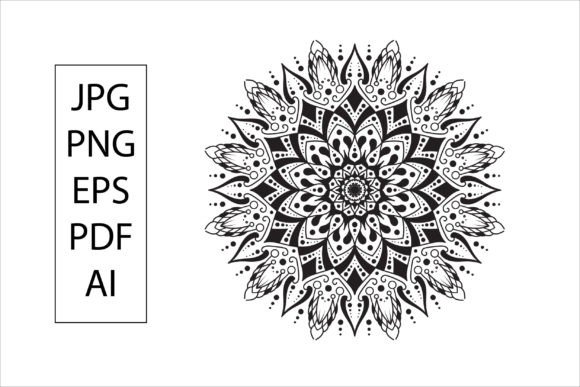
Floral Ornamental Mandala Patterns for Graphics and Illustrations
When I sit down with a client to discuss their brand identity, the conversation rarely starts with pixels or vectors. It starts with feeling. They want their audience to feel calm, luxurious, intricate, or perhaps grounded in nature. Recently, I was reviewing design assets for a boutique skincare launch that needed to balance organic ingredients with high-end packaging aesthetics. That is when I encountered Floral Ornamental Mandala Patterns. As a graphic designer who deals with branding, marketing visuals, and digital products daily, I look for more than just pretty pictures; I look for versatility, scalability, and professional integrity. Here is my practical review of this asset set and how it holds up under real-world commercial pressure.
The First Impression: Mood and Visual Weight
At first glance, these mandala designs evoke a sense of structured elegance. The term "mandala" often brings to mind spiritual symmetry, but in modern graphic design, it serves as a powerful tool for creating focal points without overwhelming the viewer. These particular illustrations feature floral motifs woven into geometric precision. For a small business owner or a creative marketer, this duality is crucial. It suggests growth (the flowers) and stability (the geometry).
The style leans heavily into modern design trends while retaining a timeless quality. It does not feel dated like some clipart from the early 2000s, nor does it feel overly trendy in a way that will expire in six months. When I placed one of these patterns on a mockup for a product label, it immediately elevated the perceived value of the item. It communicates that the brand cares about detail. This is exactly what you want when you are trying to build brand identity for a handmade business or an Etsy shop competing in a crowded marketplace.
Real-World Application: From Packaging to Social Media
I have tested various design assets in live projects, and the utility of this bundle lies in its adaptability. Let us break down where this illustration set truly shines in a commercial workflow.
- Packaging Design: This is arguably the strongest use case. Whether you are designing boxes for candles, jars for organic creams, or tags for apparel, these patterns provide a rich background texture. Because they are intricate, they draw the eye in. However, they must be used with restraint. A large layout area works best here, allowing the details to breathe.
- Product Mockups: If you are a print-on-demand seller or a crafter using Cricut, these files are gold. The inclusion of SVG formats means you can scale them infinitely for vinyl cutting or sublimation printing without losing edge quality. I successfully used a similar vector structure for a series of tote bag designs, where the mandala served as the central hero graphic.
- Social Media Graphics: In the feed of Instagram or Pinterest, visual hierarchy is everything. These patterns work beautifully as borders or corner accents. They frame your content without distracting from the primary message. For marketing visuals, they add a layer of polish that makes static posts feel more editorial and less like amateur social media management.
- Web Design and Digital Ads: For website headers or banner ads, these assets can serve as decorative elements that guide the user’s eye toward call-to-action buttons. They add depth to flat web layouts, which is essential for keeping engagement high in digital product sales.
Strategic Placement: Where It Works Best
Not every design element fits every canvas. Based on my experience, there are specific contexts where Floral Ornamental Mandala Patterns will enhance your project, and others where it might hinder it.
Ideal Scenarios:
- Themed Collections: If you are launching a seasonal line—think autumn harvest, spring renewal, or winter holidays—these patterns provide a cohesive visual thread. You can vary the colors across the four different styles to match your palette while maintaining a consistent structural language.
- Editorial Design: For magazines, lookbooks, or long-form blog posts, these illustrations break up text blocks effectively. They act as visual anchors that give the reader’s eyes a place to rest.
- Sticker Design and Merchandise: The clean lines of the vector format make these perfect for die-cut stickers or embroidered patches. The symmetry ensures that even if the shape is irregular, the internal balance remains pleasing.
Cautionary Notes: Where to Use Carefully
As a professional, I must warn you against misusing this asset. Complexity is a double-edged sword. If you compress too much information into a small space, the design collapses.
Avoid placing these patterns in minimalist branding contexts where whitespace is the star. They also struggle in crowded layouts where multiple fonts and images compete for attention. If your goal is visual hierarchy that prioritizes clear, urgent messaging, a mandala might distract rather than support. Furthermore, be wary of low-contrast backgrounds. On a dark gray or busy photographic background, the fine details of the mandala will get lost, making the logo appear muddy or unprofessional.
Technical and Practical Designer Notes
Before you download and integrate these files into your client projects, there are technical checks every designer should perform. The product description mentions JPG, PNG, and SVG files, which is a robust mix, but each has its own quirks.
First, always inspect the SVG design file. Open it in your vector software to ensure the paths are clean and not filled with unnecessary anchor points. Bloated code can slow down your rendering time and cause issues when exporting for web use. Check if the layers are grouped logically; this saves hours of editing time later.
Second, test the PNG design transparency. Zoom in to 400% to check for jagged edges or halos around the curves. For printable design work, resolution is key. Ensure the PNGs are at least 300 DPI if you plan to use them for physical prints like posters or flyers.
Third, consider typography pairing. These ornate patterns require typefaces that can stand up to their weight without competing. A bold sans serif font provides a modern contrast, while a classic serif font enhances the elegant mood. Avoid thin script fonts unless they are thick enough to be legible over the pattern. Always preview your design in black and white to ensure the composition relies on value and shape, not just color.
Final Verdict on Commercial Viability
Does Floral Ornamental Mandala Patterns belong in a professional designer’s toolkit? Yes. It offers a versatile foundation for creative design projects that need a touch of organic sophistication. It supports small business branding by adding a premium feel to otherwise simple products. Whether you are creating marketing visuals for a local event or designing commercial design assets for an online store, this bundle provides the structural integrity needed for polished results.
However, remember that a great asset is only as good as the strategy behind it. Use it to enhance, not replace, your core message. Confirm your commercial license allows for end-product sales, especially if you are reselling items like t-shirts or mugs. When used with intention, these patterns transform from simple decorations into powerful tools for brand storytelling and customer engagement.