Lily Flowers, Floral Clipart, Border Review
When I first opened the Lily Flowers, Floral Clipart, Border file to evaluate it for a client project, my immediate reaction wasn't about stitch counts or file formats. It was about the mood. There is a distinct elegance in this design that screams "spring renewal" and "gentle sophistication." As an experienced designer who has spent years turning digital graphics into tangible stitched realities, I look for designs that translate well from screen to fabric. This particular set of Illustrations feels like it belongs on a high-end boutique tote bag or a delicate baby onesie rather than a rugged work shirt.
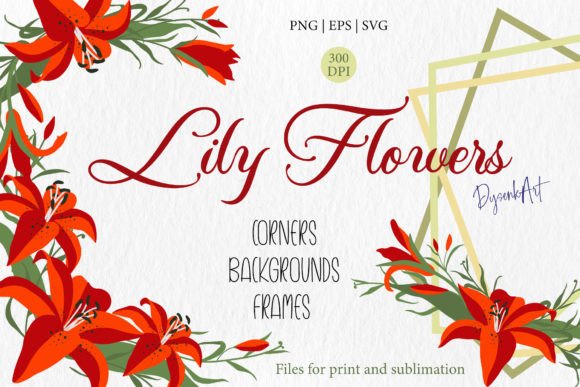
The visual personality of the Lily Flowers, Floral Clipart, Border is soft yet structured. The lilies are rendered with enough detail to show their natural curves, but they retain a clean line quality that suggests they will hold up beautifully under a satin stitch. The border element is particularly interesting; it offers a framing capability that makes it versatile for everything from greeting cards to finished textile patterns. Before I committed to using this in a real production run, I had to ask myself: does this design have the practical backbone to survive the embroidery machine and the wear and tear of daily life?
From Screen to Stitch: A Real-World Scenario
Let's talk about a specific situation where I recently considered this design. I was preparing a custom order for a local florist who wanted branded merchandise for her spring collection. She needed something that felt personal and artisanal, not mass-produced. She envisioned embroidered patches for her staff aprons and small decorative accents on reusable shopping bags. When I pulled up the Lily Flowers, Floral Clipart, Border preview, I knew it could work, but only if executed with care.
I imagined the final product: a heavy-duty canvas tote bag featuring the floral border running along the bottom hem, with a cluster of lilies centered above. The contrast between the crisp lines of the Graphics and the rough texture of the canvas would create a lovely tactile experience. However, I also had to consider the sweatshirt option. If we were to embroider this onto a cotton blend hoodie, the density of the fill stitches would need to be balanced so the fabric didn't pucker. The design isn't just a pretty picture; it's a structural component of the garment. In this context, the Lily Flowers, Floral Clipart, Border serves as a bridge between digital art and physical craft, elevating a simple tote into a statement piece that customers would actually want to keep.
Performance in Diverse Embroidery Applications
The versatility of this design is its strongest asset for Etsy sellers and small shop owners. Because it is categorized as Illustrations and Graphics, it naturally lends itself to various applications beyond standard apparel. I see this embroidery file thriving in the nursery decor market. A pillow cover featuring the lily motif would add a touch of class to a child's room without being too overwhelming. Similarly, for holiday embroidery, the border aspect makes it perfect for framing a monogram on a tea towel or a blanket.
However, not every surface is created equal. When evaluating this for custom apparel, specifically sweatshirt embroidery, the thread colors become critical. Light pastel threads against a dark background might lose the delicate details of the lily petals, while white thread on a black shirt creates a classic, high-contrast look that highlights the running stitch outlines effectively. For commercial embroidery projects involving hats or caps, the curved surface presents a challenge. While the Lily Flowers, Floral Clipart, Border is adaptable, placing a large, detailed flower on a curved cap front requires precise digitizing to ensure the shape doesn't distort when the needle moves.
In terms of stitch density, this design appears to strike a good balance. It avoids the pitfalls of overly dense areas that can make fabric stiff or cause puckering. The applique design potential here is also worth noting; adding a layer of fabric behind the lilies could enhance the texture, making the flowers pop off the page. Whether you are creating personalized gifts or craft business inventory, the clarity of the design ensures that the finished product looks professional and intentional.
Where Caution is Required
Despite its strengths, there are specific scenarios where I would advise proceeding with caution. The most obvious limitation is the size of the hoop. If you attempt to use this design in a very small hoop, such as one used for cufflinks or tiny jewelry tags, the intricate details of the lilies may get lost or become indistinguishable blobs of thread. The embroidery project needs enough space to breathe.
Fabric texture is another major factor. On thin, stretchy fabrics like lightweight jersey or sheer silks, the tension required for a stable stitch could distort the material. The Lily Flowers, Floral Clipart, Border works best on stable, medium-weight fabrics like denim, canvas, or heavy cotton. If you are working with textured fabrics like bouclé or fleece, the fill stitch might not lay flat, ruining the smooth appearance of the petals. Additionally, if you plan to wash the finished product frequently, such as with kitchen towels or aprons, you must ensure the stabilizer is removed completely and the edges are secured to prevent fraying over time.
Another area to watch is the color contrast. On dark fabrics, the lighter threads might not provide enough coverage, requiring multiple passes or a different thread weight. This can increase the stitch density and potentially lead to stiffness. Always test your thread colors against your chosen fabric before committing to a full production run. The design's beauty relies on the interplay of light and shadow, which can be compromised by poor color choices.
Practical Designer Notes for Success
If you are ready to integrate the Lily Flowers, Floral Clipart, Border into your workflow, here is some essential advice from the trenches. First and foremost, always test the design on scrap fabric. This is non-negotiable. You need to see how the machine embroidery design behaves on your specific materials. Check the hoop size compatibility and ensure you are using the correct type of stabilizer to support the weight of the stitches.
Inspect the small details closely. Sometimes, what looks perfect on a computer screen can appear jagged or broken when stitched. Use a magnifying glass or zoom in on your monitor to check the corners and fine lines. It is also wise to convert the design to black and white mockups to visualize the stitch paths without the distraction of color. This helps identify any potential issues with spacing or density.
For those selling finished items, confirm the licensing terms carefully. Are you allowed to sell the finished product commercially? Do you need a separate license for the digital embroidery file itself? Transparency with your customers builds trust, and knowing exactly what rights you have protects your craft business. Finally, compare light and dark fabric backgrounds to see which offers the best presentation for your brand aesthetic. The right choice can turn a simple embroidered patch into a coveted accessory.
Ultimately, the Lily Flowers, Floral Clipart, Border is a strong contender for designers looking to add a touch of nature to their handmade products. It offers a blend of artistic flair and practical utility that fits seamlessly into modern crafting trends. By understanding its limitations and leveraging its strengths, you can create finished products that not only look beautiful but stand the test of time and washing. Whether you are designing for a wedding gift or a small shop product, this design provides a solid foundation for creativity.